By Tommy H. Thomason

Friday, June 28, 2013

The A-12 Avenger II Program: The End is Near

It's hard to believe that it has been more than two years since I last updated the status of the A-12 Avenger II program and its termination is still not yet complete from a financial standpoint. See http://thanlont.blogspot.com/2011/05/12-it-aint-over-until-its-over.html

For a prior post and links to four (!) more on the A-12 in this blog, see http://thanlont.blogspot.com/2011/01/gift-that-keeps-on-giving-final-chapter.html

The program was, of course, canceled back in 1991, but like Jarndyce v. Jarndyce in Dickens' Bleak House, it has lingered on as a lawyer's dream.

However, according to an online Aviation Week note dated 21 May 2013:

In a sign of movement in the epic legal battle over the A-12 Avenger II, the Obama administration is asking Congress to allow the Navy to accept a settlement in the case.

In a letter outlining amendments to the administration’s fiscal 2014 request for appropriations, the Pentagon is seeking legislation that would “authorize the Secretary of the Navy to accept and retain in-kind goods and services in lieu of monetary payment, for the purposes of a settlement of the A-12 aircraft litigation.”

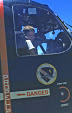
More importantly for aviation history, the A-12 mockup has finally been moved to the Veterans Memorial Air Park in Fort Worth, Texas.
 Bill Spidle Photo

The Air Park is a nice little (and growing) aviation museum north of town and just south of Meacham Field with several aircraft on display outdoors. It's well worth a visit. See http://www.veteransmemorialairpark.com/home1.aspx

The full-scale mockup was displayed at an open house in 1996 at Carswell Air Force Base.
The mockup looks a lot better than I thought it would after more than two decades of storage, mostly outside, and hopefully the museum can refurbish it and provide a suitable venue for its display.

Tuesday, June 18, 2013

Navy Aircraft Designation Suffixes

Dana Bell has teamed up with Classic Warships to produce a series of Aircraft Pictorials on U.S. Navy Airplanes. Three have been published so far, covering the SB2U, OS2U, and F4F. See http://www.classicwarships.com/aircraft_pictorial/aircraft_pictorial.html

These are affordable, well-researched, copiously illustrated monographs. The production quality is excellent. Dana has spent a lot of time on what I call an Easter egg hunt in the National Archives, among other places, and found pictures, drawings, and information previously unpublished and that sometimes contradicts or expands on what we know about a particular airplane type.

Dana is currently sifting through boxes and boxes of 1940s documentation on the F4U-1 Corsair. One of his discoveries is that the F4U-1A designation of what the Navy called the "raised cabin" Corsair was never officially assigned. (There are more revelations but those will have to wait until this next Aircraft Pictorial is published.)

His assertion has generated some debate. After looking at some of my stuff that dates back to 1943 and 1944, I agree with Dana that the Navy did not officially recognize the raised cabin F4U-1 with a designation change.

In the process, I got interested in the Navy's use of letter suffixes to aircraft designations. As a result, I'm pretty sure that the early (through say, 1942) and subsequent meanings have been inadvertently conflated in a confusing way.  For example, in explanations in books and on line, you'll find that the letter suffix A stands for many different changes. After examining several examples and in particular relying on an explanation in Introduction to Naval Aviation (NavAer-80R-19) published in January 1946, it appears to me that up through about 1942 there were very few letter suffixes that were related to specific applications or capabilities. (One was P for Photographic.) "A" simply meant the first "minor modification not sufficiently important to change the modification number or where the airplane has been diverted to another service or for a special purpose".

It took a while to find an example of a "B" for a second minor modification that substantiated my thesis, which was the Consolidated NY trainer.

The above is an NY-2 modified with leading edge slats that was being evaluated by NACA in 1928. Consolidated Aircraft* won a 1925 Navy competition for a trainer that was then designated NY-1 (N for trainer, Y for Consolidated, no number between the type letter and the manufacturer letter because it was Consolidated's first trainer for the Navy). According to the interweb, the NY-1A was a modification for gunnery training with a machine gun mounted in the rear cockpit and the NY-1B was an NY-1 modified with the bigger wing and more powerful engine of the NY-2.

So in my opinion the suffix A originally didn't actually stand for amphibious (PBY-1A), armament (J2F-2A), target towing (JRF-1A), floats (TBD-1A), single-stage supercharger (F4F-3A), carrier-basing (SOC-3A), etc. It simply distinguished the modified airplane from the baseline one, like a dash number change signified a more significant change.

At some point early in World War II, however, the use of A appears to have acquired a specific connotation, possibly used only to differentiate a Navy airplane built for the Army, e.g. SB2C-1A. "B" similarly became associated with a Navy airplane that was to be provided to the British, as in F4F-4B. As a result, the first minor modification was now recognized with a "C" suffix and the second, with a "D". This led to the TBF-1C (wing guns and more fuel), the TBF-1D (ASB radar), SB2C-1C (cannon), F4U-1C (cannon), F4U-1D (multiple improvements), etc. Note that "C" did not, in this instance, stand for "cannon": it was a coincidence that the first minor change was to cannons. Thinking that D stood for droppable fuel tank in the case of the F4U-1D was even more fanciful; the F4U-1 had provisions for a droppable fuel tank.

Shortly after this philosophy change, however, mission-specific suffixes began to proliferate and the use of a generic suffix progression in alphabetic order beginning with C was abandoned.  One of the early additions was "N" for a "night" fighter (as an indication of the designation system development in progress at the time, the radar-equipped fighter version of the F4U-1 was designated F4U-2; the equivalent F6F-3 modification was the F6F-3N.) But I can't yet say whether a particular suffix used in the mid-1940s was the result of the alphabetical approach or the implementation of specific letters for particular mission capability modifications.  "C" was eventually used to designate a land-based airplane that had been adapted to be carrier capable but it's possible that the SNJ-3C was so designated because it was a first minor modification of this trainer. Similarly, "E" came to mean an electronic modification, but the TBF/M-1E might very well have simply been the third minor change of the Avenger.

Consistency in designations was not a Navy hallmark in any event. For example, the modification of the Douglas Devastator to add floats was designated TBD-1A. A similar evaluation of the Vought Vindicator was designated XSB2U-3...

Another divergence was the designation of successive variations of the North American PBJ, which for all intents and purposes was a US Army Air Forces B-25 Mitchell. Although the Navy did redesignate it as the first Patrol Bomber that they procured from North American (J), the suffix letter for major derivatives was consistent with the Army designations, e.g. the B-25H became the PBJ-1H.

*Consolidated Aircraft was merged with Vultee Aircraft in 1943 to become the  Consolidated Vultee Aircraft Corporation. After the war, the company adopted the brand name Convair. It subsequently was acquired by General Dynamics but as a named division. In 1994, GD eventually sold that portion of the division still based in San Diego to McDonnell Douglas Aircraft and the remainder that had been developing and building airplanes in Fort Worth, Texas to Lockheed.

Sunday, June 9, 2013

F8U-3 Redux


I've written a couple of posts on the F8U-3 and a monograph for Steve Ginter.

http://thanlont.blogspot.com/2008/12/f8u-3-best-airplane-navy-didnt-buy.html

http://thanlont.blogspot.com/2010/08/best-f8u-3-monograph-now-available.html


The monograph is pretty good, if I do say so myself, but if in doubt you can read reviews of it on Amazon http://www.amazon.com/dp/0984611401 and then order it if it appeals

Whether or not you have the monograph, this is a pretty good Vought sales pitch for the airplane, emphasizing the fact that a radar operator wasn't necessary for the successful interception of an attack: http://www.texasarchive.org/library/index.php/F8U-3_Weapons_System

Unfortunately, the admirals didn't agree, opting for the two-seat F4H instead...

Saturday, May 25, 2013

The Curious Case of the A3D-1Q Crew Size

10 September 2022: Also see https://tailhooktopics.blogspot.com/2013/06/a3d-1q-notes.html

26 May 2013: Updated with additional information and an illustration

Every once in awhile someone asks a question that causes me to do a fact check and research that leads to a different answer than I would have given otherwise. In this case, the question was: "Can anyone tell me why these A3D-1Q's had open bomb bay doors...if they were originally (sealed) to accommodate the ECM* monitors in an unpressurized bomb bay compartment. It would seem that opening the bomb bay would be impossible if it was converted to an ECM* compartment"

*Strictly speaking, the mission wasn't ECM (Electronic CounterMeasures) but electronic reconnaissance. The A3D-1Qs were recording communication, navigation, and radar emissions, not jamming them.

Five Douglas A3D-1s bombers were converted to have an electronic reconnaissance mission capability by the Navy, reportedly at the Navy repair and overhaul facility at Norfolk, Virginia, and redesignated A3D-1Q. The A3D-1Q Characteristics Summary (CS) dated 15 July 1957 gives the Bureau Numbers (130356 and 130360-3) and states that it had a crew of seven and a "pressurized cabin". Other published sources state that the bomb bay was not pressurized (the bombs didn't need it) even though there were guys sitting back there or that there was a pressurized "capsule" installed in the bomb bay.

The bomb bay door that's open is the one on the left. The right one was modified to add a canoe-like fairing to house antenna(s); it could be opened if required. There were also mission-specific antennas located in the fairings on the side of the forward fuselage and the tip of the tail.
Two of the A3D-1Qs were delivered to VQ-1 and two to VQ-2 in late 1956.  (Chuck Huber reports that at least one A3D-1Q was delivered to VQ-1 still glossy Sea Blue.)

An excellent history by Capt Don East, USN of the U.S. Navy's electronic mission activity and these two squadrons is provided here:
http://www.coldwar.org/histories/HistoryofUSNavyFleetAirReconnaissance.asp
and here:
http://www.coldwar.org/histories/HistoryofUSNavyFleetAirReconnaissancePartTwo.asp

Capt East makes it clear that these were four-place, not seven-place, airplanes: pilot, navigator, crew chief (who would also have been the tail gunner), and a radio-electronics operator. There were a couple of other indicators as well as to the number of crewmen. In both fatal crashes, one at VQ-1 and one at VQ-2, there were only four crewmen aboard; although one was a proficiency flight, the other was almost certainly operational. There are only four guys in this picture of a VQ-1 A3D-1Q crew.
At first I assumed that the fourth crewman was located in the bomb bay but the more I thought about it, the less sense this made. The bomb bay was not pressurized (although the flight deck wasn't pressurized much and pressurization isn't absolutely necessary for flight at high altitude). There didn't appear to be any side or upper escape hatches added to the mid fuselage, much less a porthole. Theoretically, however, bailout could be accomplished by opening the bomb bay door and the fourth crewman would probably ride the jump seat on the flight deck for takeoffs, landings, and when a ditching or crash landing was going to occur.

Closer inspection of the forward fuselage revealed two interesting features though. First, the periscope fairing had been removed consistent with the removal of the ASB-1 bombing system since the electronic reconnaissance mission didn't require it. Second, the aft part of the canopy appeared to have be replaced with solid panels and the sides of the canopy looked nonstandard as well.

As a result, I suspected that the flight deck of the A3D-1Q was configured with a fourth work station. Eliminating the bombing system would allow the right front seat to be moved forward, creating adequate space behind it to accommodate it.

Captain East confirmed by email that the A3D-1Q had a four-man crew and they were all seated on the flight deck. The fourth crewman's work station was not in the bomb bay.

This is a comparison of a poor-quality A3D-1Q canopy photo with one of an A3D Bomber that suggests the seating arrangement on the right in the A3D-1Q was the same as existing one on the left although the fourth seat reportedly faced forward.
However, one second-hand report has the aft right-hand seat facing forward, with the back of the seat consisting of "the aft bulkhead of the cockpit". That would be consistent with the addition of a jump seat during A3D-2 production.
It is also described as a bucket seat, which would seem to be more appropriate for crew comfort on a long mission.

How to explain the 1957 CS that lists it as a seven-place airplane with a pressurized cabin? This is almost certainly an error, possibly caused by confusion with the forthcoming A3D-2Q (the mockup had been reviewed in September 1954) that was a seven-place airplane with four crewmen added in a rearrangement of the fuselage interior that created a pressurized cabin immediately behind the flight deck. (See http://tailspintopics.blogspot.com/2010/09/mighty-skywarrior.html) The same applies to the published and online instances of the A3D-1Q described as having seven crewmen.

I'd appreciate it if someone would look inside the cockpit and bomb bay of the last remaining EA-3A (the redesgnation of the A3D-1Q) that is on display at the Pima Air & Space Museum http://www.pimaair.org/collection-detail.php?cid=94 and report back.

There might be enough hardware left in it to ascertain the configuration of the fourth crew station. It was however, used by Westinghouse to test side-looking radar, among other things, so the flight deck might have been rearranged at some point and no longer represents that of the A3D-1Q.

I'm also hopeful that a connection gets made with an A3D-1Q crewman who has a reliable memory...

Tuesday, May 14, 2013

The First Launch of an Unmanned Aircraft from an Aircraft Carrier?

Not the X-47B, despite the press release claim.
U.S. Navy photo courtesy of Northrop Grumman by Alan Radecki

It might not even be the tenth one. For sure there were a few F6F drones catapulted during the Korean War on combat missions:
There were F6F Hellcats launched as target drones.

At least one, anyway:
National Naval Aviation Museum via Rick Morgan

And then there was at least one Regulus missile launch using a cart:
And there may have been some TDN or TDR drone catapult launches although all I've ever seen are deck-run takeoffs of the TDN:

Since the Brits were first with just about everything concerning carrier-based operations, I wouldn't be surprised if they had held the honour on this achievement as well.

But congratulations to Northrop Grumman and the Navy nevertheless. The launch itself is actually not a big deal; F-18 pilots aren't even supposed to have their hand on the control stick during the launch. The taxi forward and hookup to the catapult unmanned? That is a much bigger deal and the X-47B is the first to do that.

The arrested landing on a carrier of an unmanned airplane would also be a first for sure. But not the first hands-off arrested landing. That was done more than 50 years ago. See http://thanlont.blogspot.com/2011/07/look-no-hands.html

The Last Flight of Vought's XF7U-1 Cutlass BuNo 122472

Once again, I've come across something that I would have liked to include in one of my books, in this case the crash report for XF7U-1 BuNo 122472 on 28 September 1949 during takeoff at Vought's temporary flight test facility at Ardmore, Oklahoma.

The first XF7U-1 in January 1949:


When I was writing my history of the F7U-1 (see http://www.amazon.com/Chance-Vought-F7U-1-Cutlass-Fighters/dp/0984611479), I only had a few cryptic statements about the circumstances of the crash, which the pilot, Paul Thayer, survived with only cuts and bruises.

I had assumed that the crash was caused by the load asymmetry (there was a drop tank loaded on the right inboard wing) combined with a new yaw control concept and that it was the first flight in this configuration. I speculated on how that caused the crash. That took some doing because you'd expect a load on the right wing to result in the right wing tip hitting the runway, not the left, if there wasn't enough control power at takeoff speed to keep the heavy wing up.

As it turns out, however, the load was on the right wing and was even greater than in the reports I relied on, a 250-gallon drop tank not 150.  Not only that, this was Thayer's third flight that day in this configuration, which was a big surprise. The only difference on the takeoff this time was a gusty crosswind from the right, not down the runway as before, and he had the canopy open instead of closed. As with the previous two takeoffs, the leading edge slats were closed, which was the preferred configuration for field takeoffs at the time.

Thayer lifted off holding left rudder as I had assumed because of the drag and weight of the drop tank on the right side. (It was even more necessary with a crosswind from the right that I didn't know about.) He then moved the gear handle to the up position, so the gear doors opened and the landing gear began to retract. As the landing gear was coming up, the airplane began to slowly yaw to the left. Thayer pushed right rudder but the left yaw didn't stop and the left wing began to drop. Right stick and more right rudder didn't stop the left roll and yaw so he pulled the throttles off, not wanting to keep trying to fly an airplane that he was not in control of.

The left wingtip touched first just off the left side of the runway, with the airplane slewing around to the left about 100 degrees as it slid across the grass, wheels up, for about 750 feet. During the slide, the forward fuselage broke off just ahead of the engine inlets and wound up lying on its right side at right angles to the fuselage ahead of the left wing.

Vought couldn't find anything wrong with the control system, engines, or anything else for that matter. Although the XF7U was instrumented, it was by means of a photo-observer panel, which means that a picture was taken of a separate set of instruments every five seconds. In other words, the engineers were looking at relatively infrequent snapshots of a rapidly deteriorating situation. Their best guess was that Thayer was too slow and not aggressive enough in his initial response to the left yaw that he had caused with the left rudder required on the takeoff roll. It didn't help that while the landing gear was coming up, there was a significant reduction in directional stability. Or that the wind was gusty.

Their conclusion: "The airplane would be expected to yaw and roll to the left when stalled at high powers with slats closed. The accident, therefore, is explainable on the basis of an early onset of a stall."

Tuesday, April 23, 2013

Things Under Wings: FJ-4B

23 April 2013 Revision: Well, that didn't take long. Gerry Whiteside has correctly identified the weapon on the FJ-4B in this post as a 750-lb Mk 77 Fire Bomb modified with a Mk 19 Bomb Conversion Kit. I've revised the post accordingly...

I'm just knowledgeable enough to know that these are not standard bombs under the wing of  a VA-63 FJ-4B:
Emil Buehler Library, National Museum of Naval Aviation

My go-to guy for stuff like this, Jim Rotramel, confirmed that it was definitely not a 2,000-lb bomb as a caption in at least one publication would have it but did not know what it was.

And there is a second picture of one being jettisoned from a different VA-63 FJ-4B:


Emil Buehler Library, National Museum of Naval Aviation

What was somewhat mystifying at first is that this is a squadron airplane, not a North American dog ship or a VX-5 FJ-4B that would usually be used stores-jettison envelope tests, one of the more dangerous flight test events (the store might depart cleanly or it might go rogue, with dire consequences).

But wait, there's more: the photo caption for the first picture indicates that it was taken on 9 September 1958, shortly after the squadron had begun a deployment aboard Midway (CVA-41). A stores-carry and jettison evaluation by a squadron at sea? That seems unusual even though those were somewhat more permissive times in Naval Aviation.

Close examination of the store suggested that it might be an AJ Savage tip tank with the addition of a tail fin kludge (for one thing, the fins are externally braced).

Note the clear nose and that they might be painted sea blue. The FJ-4B store seemed a bit longer than the AJ tank but that could have been a modification, like the addition of the shackles and fins. (The FJ-1 Fury carried a similar tip tank and an longer version was used to provide the range, just barely, for the Bendix Trophy "Race"  in 1948.)
As a result, I had thought that it might have been a kludge to provide a source of external fuel tanks because not enough of the unique FJ-4 drop tanks were available for this deployment, one of the first for the FJ-4B.

Another guess was that it was a revisit to a home-grown napalm bomb concept to have on hand for crowd control if necessary. That turned out to be close. As Gerry pointed out in his comment below, it is actually a standard 750-lb Mk 77 fire bomb with the Mk 19 bomb conversion kit. It does in fact have a clear nose cone over the igniter. The addition of tail fins in the bomb kit allowed it to be dropped from a dive as opposed to a low-level pass.